Goat Care
The information on this page is what we have found works for our goats on our hobby farm. I hope the list makes you ponder about your own goat management and then research, research, research to figure out what works for you.
Feed/Grain
La Cuesta Milk Goat Feed is our grain feed preference (manufactured by West Feeds in West, Texas). We like a pelleted form over textured so the goats cannot selectively sort through the feed and eat only what they wish to eat. We pick up the bagged feed at the West Feeds mill so it is as fresh as can be. If in a pinch, there are a few local feed stores that sell the West brand feed like D & L Farm and Home in Denton, TX. I feed about 1/2 cup per goat per feeding (once in the morning and once in the evening), but my goats are on pasture also so if on dry lot, adjust feeding amount according to body condition.
Feed Additives
Calf Manna - I add this supplement to our daily feed pellets at about a 5:1 ratio, with feed pellets being the base of the mixture.
Other additives I have used or heard good things about and have wanted to try out:
BOSS (Black Oil Sunflower Seeds) - When I add these to our feed pellets, I mix at about a 5:1 ratio, with feed pellets being the base of the mixture. They are a good sources of fat, but be careful of Phosphorous, a mineral the seeds are high in and it can change your overall 2:1 ratio of phosphorous to calcium feeding ratio. You want to be care of this 2:1 ratio especially in males due to urinary calculi condition where stones build up in urinary tract, leading to blockages and potential death. I have not experienced this medical situation.
Beet Pulp -
Mineral/Vitamin Supplements
Loose Minerals (not a mineral block, as this can cause the wearing down of teeth) - I use VitaFerm Concept Aid in the goat variety. My goats always have an endless supply of this loose mineral.
Protein or Mineral Tubs - VitaFerm also makes protein and mineral tubs specified for goats that I occasionally put out, particularly before breeding season or when I notice my goats are not looking so thrifty. Sometimes I rotate tub brands with the HorsLic brand (yes, designed for horses but I have noted improvements in thriftiness with its use). You can even buy the tubs with an additive called Clarifly that breaks the lifecycle of the fly to reduce fly population, especially during the hot summer months.
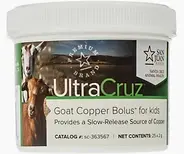
Copper Bolus - Our hard well water is rough on our goat's utilization/absorption of copper so we copper bolus on a near monthly basis (usually suggested to use a few times a year). This mineral is in capsule form and must be used with a tool (pictured below, ordered from ValleyVet.com, manufactured by Stone Manufacturing Company) ) to send it down the throat where the copper rods are extended-released over time. Too much copper can be toxic to the goats so I watch for signs of rough coat, changes in color of coat, or fish tails (hair loss at the very end of their tail that causes the tail fur to look fish tail-ish).



Hay
Dairy goats should have an unlimited supply of hay, they say. I put out a few flakes during the morning feeding and again with the evening feeding - either horse-quality coastal hay or sudan hay. I reserve the use of alfalfa to either pregnant or lactating does and even to kids up to weaning age, but do not feed alfalfa to males after weaning (neither intact or neutered). My goats also have access to pasture, so if your herd is on dry lot, then the unlimited access really applies in that situation. Goats are known to waste hay, especially if it is soiled by either feces or urine, and even it is stepped on or dirtied by the ground so a good hay rack is a necessity. We use the Tarter Hay Rack pictured below, purchased at Russell's Feed and Supply. During livestock shows, I use a Weaver brand hay bag easy to use in stalls for unlimited access to hay, purchased at NRS.


Drinking Water
I dump, rinse, and refill water buckets/containers on a daily basis. I scrub them weekly with dawn dish soap and occasionally bleach and rinse them. As mentioned above, our hard well water can be a problem with inhibiting mineral absorption so we use RV water filters on our spigots during non-freezing months to help improve the quality of water we use for the farm animals. I have pictured the brand I order from Amazon.

CDT Vaccination
On a yearly basis, our goats receive a CDT booster shot, used in goats as an aid in preventing Enterotoxemia caused by Cl. perfringens types B, C and D, and for long-term protection against Tetanus. By the time goat kids leave my farm, they have had 2 rounds of the CDT (at ages 6 weeks and 12 weeks), and then it will be a yearly dosage after that, except in pregnant does - they get an additional shot at 4-6 weeks prior to birthing so that the babies get the vaccine through the mom until the kids get their first shot at 6 weeks old. I purchase the brand pictured below at Tractor Supply (sometimes in a locked refrigerator so must ask store attendant for help to get the product).

Hoof Trimming
I trim monthly, but some recommend twice a month (it may also vary from goat to goat). Copy and paste video links below for hoof trimming. Stands can help the ease of trimming (pictured is a fitting stand and a milking stand where goats can eat from a bowl on milking stand). We use a milking stand while hoof trimming, but a fitting stand may be handy when clipping, tatoo'ing, or any activity that requires less movement of the goat.


Health Concerns to Monitor
When a goat is not feeling well, there will be physical signs so daily I give the herd a quick lookover for any goat looking or acting abnormal. What am I looking for? If I notice a goat separating themselves from the herd or acting not normal, I will perform a closer analysis (check: temperature, diarrhea, famacha score) of the goat.
-
temperature - a goat's normal temperature is 102.5-104. I use a human digital thermometer and take a rectal temperature. Sanitize the tip, tip into Vaseline, and insert 1/2 inch into rectum and wait for timer to beep. If there is an abnormal temperature, then I figure out the cause or take the goat to the vet to them to access further.
-
diarrhea (scours) - although lots of fresh pasture grass can cause looser stools, a runny and stinky diarrhea is a young goat is probably coccidia (or internal worms or the combination of the two). You can glove up, insert a finger into rectum and pull out a poop berry or two to take to the vet to analyze or take the goat to the vet and have them gather and access the fecal sample.
-
FAMACHA score - The objective of this procedure is to evaluate the goat's eye's mucous membrane to determine the severity of the goat's blood loss dur to internal parasites (worms). A fecal sample, as mentioned above, can then determine what kind of worm is causing the anemia and treat with medicine specific to worm presented in the fecal sample as evaluated by a veterinarian. See video link for technique demonstration and use of the score card to evaluate the severity of anemia (https://www.youtube.com/watch?v=tmeZkqGQnMg).
-
How the color scoring works:
-
1 (Red): Non-anemic, healthy animal.
-
2 (Red-Pink): Non-anemic, healthy animal.
-
3 (Pink): Mildly anemic, may or may not need treatment.
-
4 (Pink-White): Anemic, likely needs treatment.
-
5 (White): Severely anemic, needs immediate veterinary attention and treatment.
-
-
Coccidia Prevention -
https://horseprerace.com/toltrazuril-5-flavored-60ml/
I order the apple flavor.
Intestinal Worms - a Vet can get a fecal sample to test for what type of intestinal worm may be affecting your ogoat and then can prescribe the targeted medicine for the type of worm. I have Valzaben, Cydectin, and Ivermectin on hand for treatment, but the vet can prescribe and sell individual doses of these or other appropriate medicines.
External Parasites - CyLence is my choice of lice treatment, applied topically down topline of back like dog flea treatment. For Mite treatment, Ivermectin is giving either injection or by mouth.
Nutrient Deficiencies -


Other Recommended Equipment/Supplies
Collars and Leash - We use breakaway nylon dog collars for daily use and lead them with a rope halter, using snao onto dog collar (not placed on the head like as a halter, but you could). Then a dog choke chain is what we use for showing in the show ring. We do practice with the show collar before show events to prepare them for the different feel between the daily collar and show collar.


Veterinarian Recommendations in our North Dallas/Fort Worth area
Decatur Vet Clinic/Dr. Harrison is knowledgeable and offers affordable care.
2101 S. College Ave
Decatur, TX 76234
940-627-2158
Monday – Friday: 8:00 am – 5:30 pm (Walk-ins only 8:00 am – 3:00 pm)
Saturday: 8:00 am – 12:00 pm (Walk-ins only 8:00 am – 10:00 am)
Sunday: Closed and closed the first Saturday of every month
.png)